Nigeria pledges federal support for Lafia vaccine centre to boost local manufacturing
Health minister Muhammad Ali Pate visited the Centre for Vaccine Research and Development at FUTH Lafia and pledged federal backing for infrastructure, skills and partnerships as Africa pushes to...


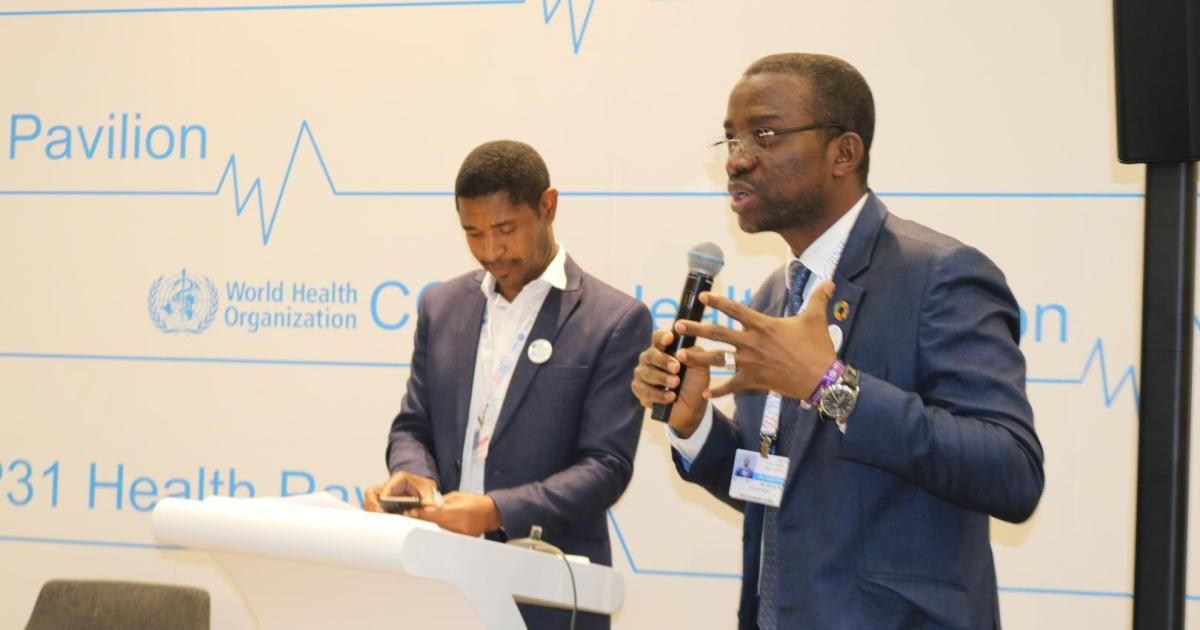
Nigeria's Coordinating Minister of Health and Social Welfare, Professor Muhammad Ali Pate, visited the Centre for Vaccine Research and Development at the Federal University Teaching Hospital, Lafia. He pledged federal support for research infrastructure, human capacity development and international partnerships to advance local vaccine discovery and manufacture. The centre sits on the campus that hosts the Federal University Teaching Hospital, where the Centre for Vaccine Research and Development is based.
Image: Federal University of Lafia sports complex by Eerat407 / Wikimedia Commons (CC BY-SA 4.0). Alt text: The sports complex and surrounding campus buildings at the Federal University of Lafia, Nasarawa State.
The visit links a single laboratory to a continent-wide plan. In our earlier reporting on Africa CDC's manufacturing agenda we explained the ambition for local production; the Africa CDC and the African Union have set a target for at least 60% of Africa's health-product needs to be met through local manufacturing by 2040, and today the continent produces about 1% of the vaccines it uses. The Africa CDC's programmes under that agenda include the Partnerships for African Vaccine Manufacturing (PAVM), the Platform for Harmonised African Health Products Manufacturing (PHAHM), and a Local Manufacturing Directorate that works on technology transfer, mapping, skills and market creation.
Africa CDC's own mapping and announcements provide the numbers behind the agenda. Africa CDC says its continental database identifies 574 manufacturers across Africa, including 25 focused on vaccines, of which 10 already have installed capacity. The agency says the African Vaccine Manufacturing Accelerator (AVMA) is designed to mobilise up to US$1.2 billion over a decade, that Afreximbank has pledged US$2 billion, and that donor and development-finance commitments reported exceed US$3.5 billion. Africa CDC also says that between 2025 and 2030 three African vaccine manufacturers are expected to produce and secure WHO prequalification for eight vaccines.
Skills and workforce plans are central. Africa CDC launched four Regional Capability and Capacity Networks (RCCNs), with lead institutions named for each region: Institut Pasteur du Maroc and the Unified Procurement Authority in North Africa; the Africa Biomanufacturing Institute in Rwanda for East Africa; Institut Pasteur de Dakar in West Africa; and the CSIR in Southern Africa. The RCCN secretariats were announced on the sidelines of the 2nd Vaccines and Other Health Products Manufacturing Forum in Cairo, 4-6 February 2025.
Nigeria's regulatory progress matters for turning lab discoveries into doses. NAFDAC achieved the WHO's Maturity Level 3 benchmarking in 2022 and created a Directorate of Vaccines, Biologics and Medical Devices in November 2024. Nigerian regulators have publicly asked for help to establish fill-and-finish capacity, the practical step needed before locally made vaccine bulk can become finished vials ready for use and lot release.
Local manufacturing is only one part of the picture at home. In Nasarawa State, local reporting and studies show continuing gaps in vaccine access, uptake and trust: distance to clinics, flooding, resourcing shortfalls and misinformation have kept some families from completing childhood immunisations. Building factories and labs must be matched by work with communities to convert supply into vaccinations. I see the Lafia visit as part of a wider push across Africa to build vaccine manufacturing capacity; federal support that reaches clinics as well as labs will be needed if research is to become vaccinations for families.
During the visit Professor Pate praised the Lafia centre as a platform for discovery and for creating economic value. The centre's chief medical director, Dr Ikrama Hassan, said the minister's engagement supported the hospital's research and development efforts and would help open opportunities for collaboration, capacity building and infrastructure investment.
Newzroom dot Africa has reached out to Africa Centres for Disease Control and Prevention and National Agency for Food and Drug Administration and Control for comment and is awaiting a response. This story will be updated when they respond.
Source: Africa CDC