MeerKAT survey data processed in India; 1.5 petabytes of public releases mirrored in US and Germany
IUCAA in Pune ran its ARTIP pipeline on about 1.5 petabytes of MeerKAT MALS data and published calibrated visibility products; copies of the public releases are mirrored in the US and Germany, so...
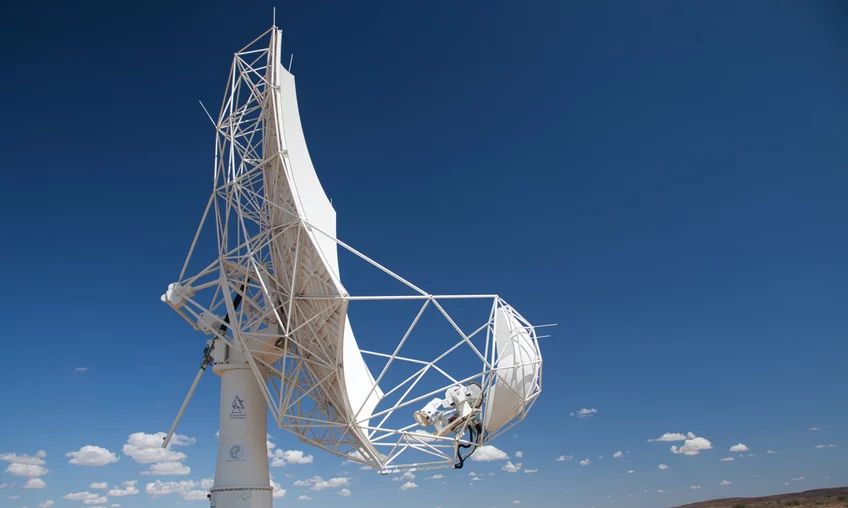
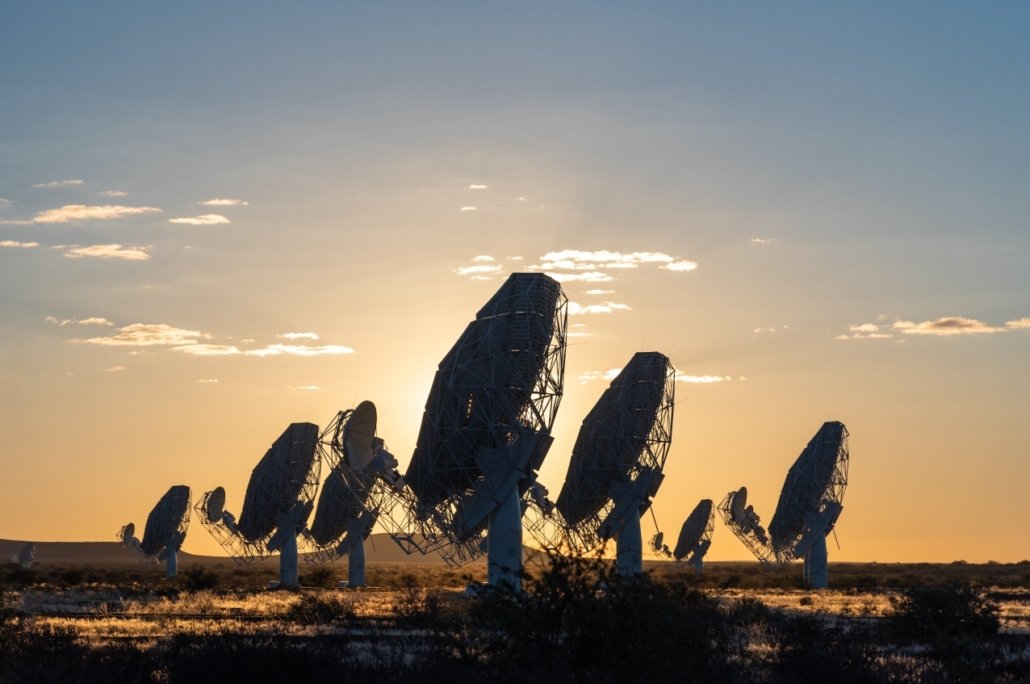
The MeerKAT radio telescope array in the Karoo, South Africa. Photo: South African Radio Astronomy Observatory.
IUCAA in Pune processed roughly 1.5 petabytes of raw MeerKAT data from the MeerKAT Absorption Line Survey (MALS) and published public releases that include calibrated visibility products, with mirror copies held in the US and Germany - a set-up that matters for African researchers who may need remote compute or to transfer very large files to use the data.
The MALS project page at IUCAA explains that the survey is led at IUCAA, that the raw MeerKAT signals were received and processed on IUCAA's own high-performance computing cluster, and that the ARTIP automated pipeline was used to turn raw measurements into calibrated images and spectra. See the IUCAA MALS project page: https://mals.iucaa.in/.
ARTIP is documented in the Astrophysics Source Code Library: https://ascl.net/1802.004.
The IUCAA project page lists three public releases (all from 391 MeerKAT pointings):
- DR1: radio images and a catalogue of about 495,000 radio sources over roughly 2,289 square degrees (IUCAA MALS release notes).
- DR2: a catalogue of nearly 1,000,000 radio sources; the release was used to test a prediction about the cosmic dipole (IUCAA MALS release notes).
- DR3: a catalogue of roughly 3,500 detections of cold hydrogen gas in the Milky Way (IUCAA MALS release notes).
IUCAA states that, for DR1 and DR2, the calibrated visibility data (the cleaned measurement sets from which images are generated) are public and that copies of the public releases have been mirrored to increase accessibility. IUCAA names the Open Science Data Federation (USA) and, since September 2026, the Deutsches Zentrum fuer Astrophysik (Germany) as hosts of mirror copies; see the IUCAA MALS project page for the mirror listing: https://mals.iucaa.in/.
On the practical side, IUCAA and SARAO make clear that reprocessing calibrated visibilities at this scale needs serious computing power. The project page says that "South African collaborators can use the IUCAA cluster as needed, and PhD and postdoctoral projects based on MALS data have been carried out from South Africa." (IUCAA MALS project page).
What researchers need to know in practice
- Data volume: the survey's raw capture is about 1.5 petabytes in total, a very large dataset to move across the internet (IUCAA MALS project page).
- Compute: calibrated visibilities are the cleaned measurements used to make images. Reprocessing them (different imaging parameters, spectral-line searches, or higher-resolution imaging) needs substantial high-performance compute - many CPU cores or clusters, large memory and high local disk throughput - and is why remote compute or mirrors are used (IUCAA MALS project page).
- Transfer and access options: possible approaches are (a) run compute at a host that offers remote compute, (b) request access to IUCAA's cluster (IUCAA says South African collaborators may use it), or (c) transfer large datasets to local compute resources using SARAO's archive tools and resilient-transfer scripts (SARAO archive portal update).
SARAO's recent archive portal update describes bulk-download support, resilient transfer scripts and a fully API-driven archive interface; this is the public description of the South African archive and its transfer tools: https://www.sarao.ac.za/news/meerkat-telescope-data-archive-portal-update/ (SARAO archive portal update).
Mirrors and hosted products
IUCAA lists the Open Science Data Federation (USA) and the Deutsches Zentrum fuer Astrophysik (Germany) as mirror hosts of MALS releases on the project page (IUCAA MALS project page). The IUCAA material explicitly says calibrated visibilities for DR1 and DR2 are public and that releases are mirrored; the project page does not give a line-by-line inventory of which mirror hosts which exact product types. We have asked the mirror hosts and SARAO for clarification about whether each mirror holds the full calibrated measurement sets (visibilities), the processed images and catalogues, or only subsets, and will update the story when they reply.
Suggested short questions for mirror hosts or SARAO (ready for the desk to send):
- Which specific MALS products do you host for DR1 and DR2: the full calibrated measurement sets (visibilities), the processed image products and catalogues, or a subset? Please name the releases and the product types you host.
- Do you offer remote compute for reprocessing (compute near the data), and if not, do you provide documented, resilient bulk-transfer scripts or an API to support reliable large downloads into local compute environments? If so, please point us to the exact page or API endpoint.
Where to find the primary releases and code
- MALS project and release notes (primary entry point for the data releases and links to papers and files): https://mals.iucaa.in/.
- ARTIP pipeline description and code record: https://ascl.net/1802.004.
- SARAO MeerKAT archive portal update (bulk downloads, resilient-transfer scripts, API): https://www.sarao.ac.za/news/meerkat-telescope-data-archive-portal-update/.
On-record material from the project page and team membership
The IUCAA material states that about 20% of the MALS team is based in South Africa across universities including Wits, UKZN, Rhodes and Pretoria, and that South African collaborators have used IUCAA resources for PhD and postdoctoral projects (IUCAA MALS project page: https://mals.iucaa.in/).
Edit log
- 13 Nov 2026 22:16 CAT - Newzroom dot Africa sent three brief questions to the MALS project from press@newzroom.africa (recorded in our outgoing mail logs).
- 18 Nov 2026 14:08 CAT - IUCAA SciPOP forwarded our questions to Prof Neeraj Gupta (forwarding message time recorded in the IUCAA reply thread; original header showed 17:38 local IUCAA time).
- 18 Nov 2026 (date of posting on project page) - Reply from Prof Neeraj Gupta (IUCAA) was posted on the MALS project page and supplied the on-record statements quoted in this story; the reply text appears on the IUCAA MALS page (IUCAA MALS project page).
Notes and next steps
- We have not yet received a line-by-line product inventory from the mirror hosts; clarification has been requested and we will update the story when they reply.
- If the desk wishes to send the two short questions above to SARAO and to the named mirror hosts, they are ready. Newzroom dot Africa will add the two-line awaiting sentence required by the desk and will record exact send times in the edit log only after those emails have actually been sent, and will publish any replies word for word with a time stamp.
- The SARAO archive image used above is taken from SARAO's public archive portal announcement and the image file has been added to the researcher pack for this story.
Newzroom dot Africa has reached out to Inter-University Centre for Astronomy and Astrophysics and University of KwaZulu-Natal for comment and is awaiting a response. This story will be updated when they respond.