South Africa's MeerKAT detects most distant hydroxyl 'space laser', more than 8 billion light-years away
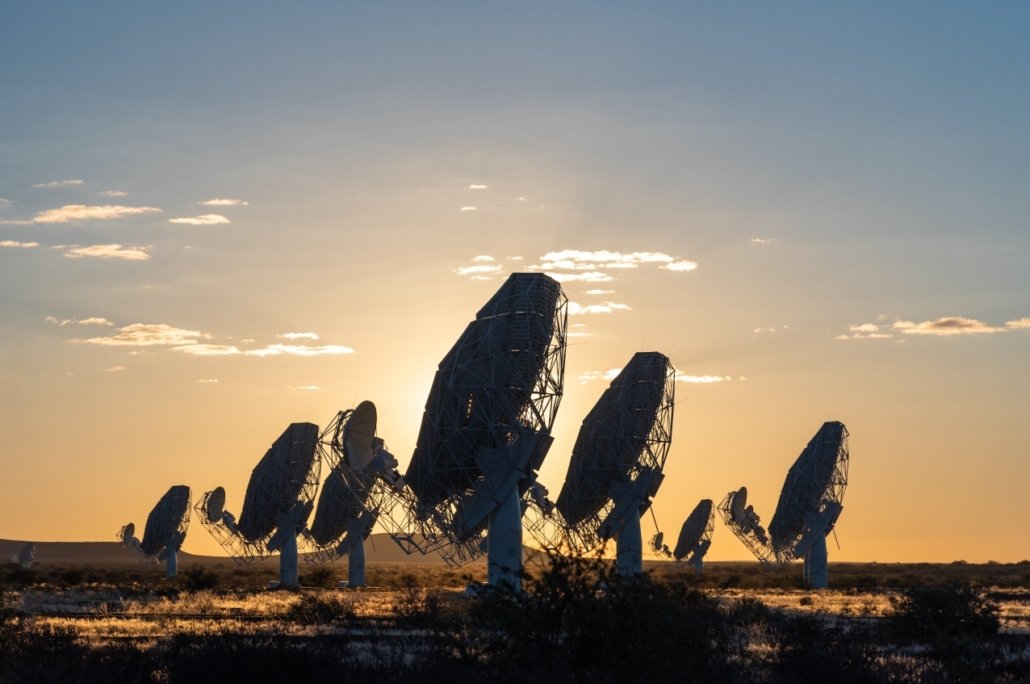
South Africa's MeerKAT has detected the most distant and brightest hydroxyl megamaser yet - a record-setting gigamaser seen when the Universe was less than half its current age.
South Africa's MeerKAT radio telescope has detected the most distant hydroxyl megamaser yet - a record-bright gigamaser more than 8 billion light-years away. The signal comes from a violently merging galaxy identified as HATLAS J142935.3-002836.
Source: MeerKAT discovers record-breaking cosmic laser halfway across the Universe (SARAO/IDIA news release); preprint: arXiv:2602.13396.
Hydroxyl megamasers are extremely bright radio emissions produced when hydroxyl molecules in gas-rich, merging galaxies amplify radio waves. Like a laser, they produce intense, narrow-frequency emission, but at radio wavelengths around 18 centimetres rather than at visible light. The discovery is so luminous that the research team classifies it as a gigamaser.
The detection relied on MeerKAT's sensitivity to faint centimetre-wave radio emission and on a chance alignment with an unrelated foreground galaxy. The foreground galaxy acted as a gravitational lens, bending and concentrating the background radio waves and effectively magnifying the signal before it reached Earth.
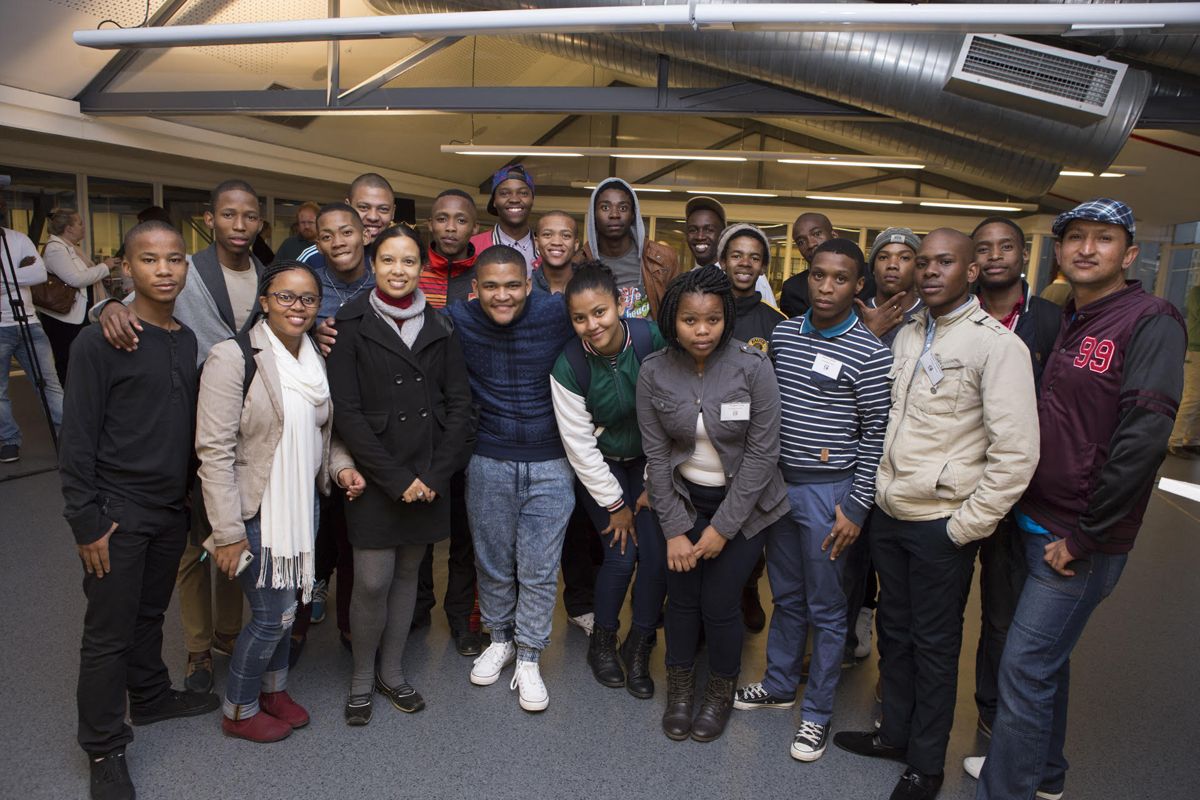
Collecting the observations was followed by careful calibration and analysis. MeerKAT produced terabytes of data that the team calibrated and processed using specialised pipelines and computing platforms developed and supported by the Inter-University Institute for Data-Intensive Astronomy (IDIA). The researchers say those pipelines, the software support staff and the local computing resources were essential to detect and confirm the gigamaser.
Dr Thato Manamela, SARAO-funded postdoctoral researcher at the University of Pretoria and lead author of the study, said the system was extraordinary and explained that a foreground galaxy had gravitationally lensed and amplified the distant radio waves before they were detected by MeerKAT, in the SARAO/IDIA news release.
"This result is a powerful demonstration of what MeerKAT can do when paired with advanced computational infrastructure, fit-for-purpose data processing pipelines, and highly-trained software support personnel," said Prof Roger Deane, co-author of the study and Director of IDIA, in the SARAO/IDIA news release. He said the combination helps South African scientists lead internationally competitive research.
Hydroxyl megamasers trace the most violent galaxy collisions, where large gas reservoirs fuel intense star formation and feed central black holes. The team says they are carrying out systematic, deep surveys with MeerKAT to build a larger sample of such systems; gravitational lensing amplifies signals when it occurs and can help detect very distant objects.
Manamela said the team plans larger surveys and aims to find hundreds to thousands of similar systems, and that researchers at the University of Pretoria are building the computational pipelines and algorithms needed to open this observational frontier ahead of, and eventually with, the Square Kilometre Array, in the SARAO/IDIA news release.
The preprint is available on arXiv:2602.13396 and the paper has been accepted for publication in Monthly Notices of the Royal Astronomical Society Letters. Key facts in this report are taken from the SARAO/IDIA news release linked above and the authors' arXiv preprint.
Newzroom dot Africa has reached out to University of Pretoria and Inter-University Institute for Data-Intensive Astronomy for comment and is awaiting a response. This story will be updated when they respond.
Source: SARAO