Students from South Africa's historically disadvantaged universities join radio-astronomy training for first time
Nineteen students from Kenya and South Africa have completed an eight-week DARA-KOTI programme that for the first time included students from South African historically disadvantaged institutions...
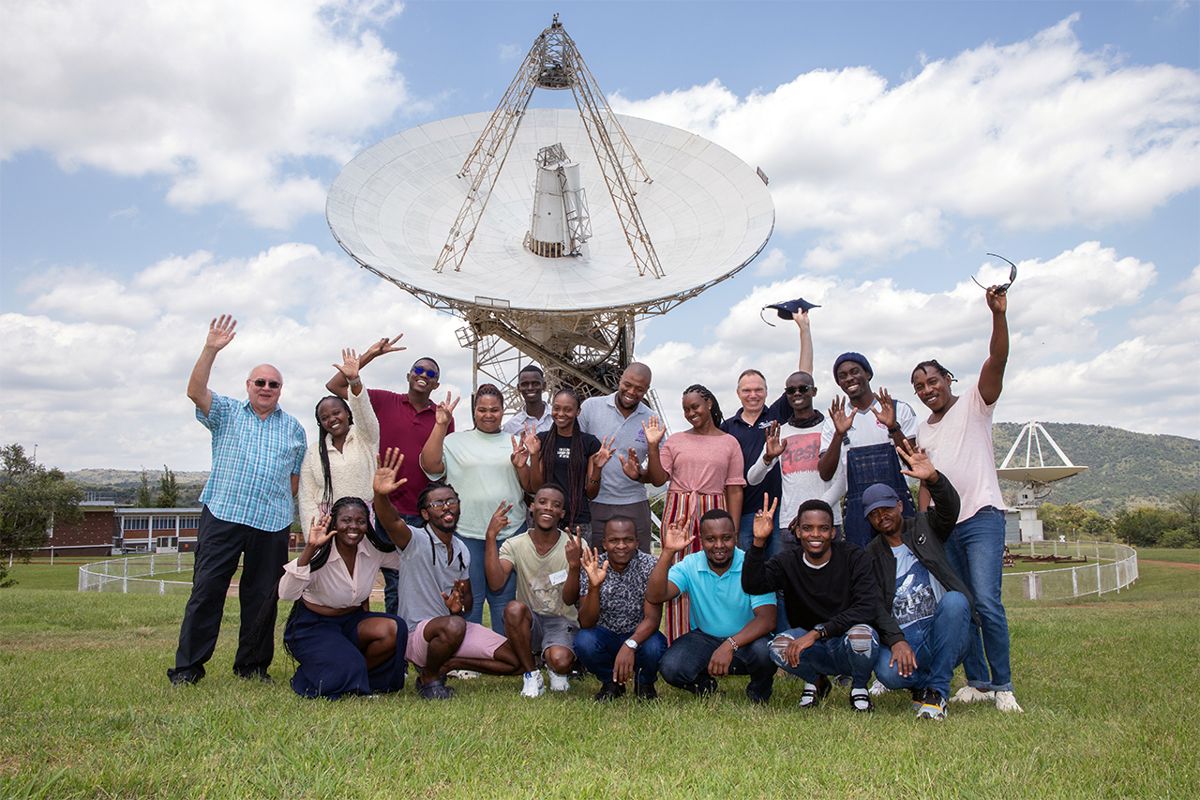
Nineteen students from Kenya and South Africa have been taking part in the DARA-KOTI astronomy training, the first time the Development in Africa with Radio Astronomy (DARA) basic programme has been offered to students from South African historically disadvantaged institutions (HDIs).
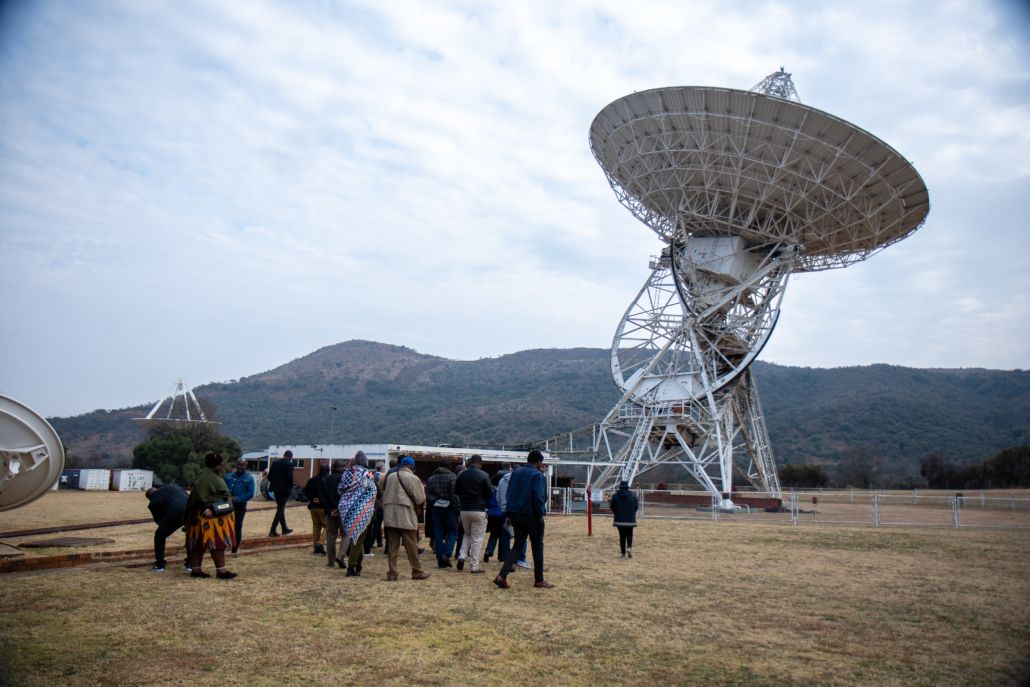
The course, run with the Kenya Optical Telescope Initiative (KOTI) and funded by the University of Leeds, gives introductory astronomy training to science and engineering students, recent graduates and industry staff wanting new technical skills. The cohort completed an online foundation course in astrophysics in September 2023, did optical observing practicals at the Turkana Basin Institute in northern Kenya from 26 September to 6 October 2023, and then moved on to hands-on radio astronomy training at the South African Radio Astronomy Observatory's Hartebeesthoek Radio Astronomy Observatory (HartRAO) and at North-West University (NWU) in Potchefstroom.
Practical radio sessions at HartRAO and NWU cover the basics of radio telescopes and receiver systems and introduce very-long-baseline interferometry, or VLBI. VLBI is a way of combining signals from several radio telescopes spread over large distances so they work like a single much bigger telescope. The technique improves the detail researchers can see and is a core method used in modern radio astronomy.
HartRAO, a national research facility about 60 km north-west of Johannesburg, has long provided South Africa with radio-astronomy infrastructure and training. The observatory began life as a Deep Space Network station and now hosts a range of instrumentation used for both research and skills development. NWU supplies local computational resources and a physical node for the national Coding Summer School run by the Centre for High Performance Computing (CHPC) and the National Institute of Theoretical and Computational Sciences (NITheCS).
Including students from HDIs matters for the careers the Square Kilometre Array (SKA) era will need because radio astronomy training teaches engineering, software, data and systems skills that are directly transferable to research groups, the space sector and data-driven industries. DARA says the broader project aims to build high-tech skills across SKA partner countries and to establish lasting research groups. Since 2015 the DARA programme has trained more than 300 students and has offered 36 students postgraduate places through its advanced training. A proposed Phase 3 of DARA aims to extend that pipeline further by creating postdoctoral roles and strengthening Masters and PhD training in partner countries.
"These students are similar to those we have trained in the partner countries in that they have usually had no prior opportunities to explore the exciting world of astronomy and they are grabbing it with both hands," said Prof. Melvin Hoare, principal investigator of DARA at the University of Leeds.
Dr Bonita de Swardt, SARAO Programme Manager: Strategic Partnerships for Human Capital Development, said the HDIs have been under-represented in past initiatives and that targeted inclusion in DARA-KOTI should lead to more students from those universities taking up future DARA and SARAO opportunities. Carla Mitchell, SARAO Africa Programme Manager, said the programme supports SARAO's human capital development goals and the wider SKA science vision across partner countries.
Students described intensive, hands-on learning. Andile Fani, a master's student at the University of the Witwatersrand, said the Kenya training broadened his outlook beyond the part of the electromagnetic spectrum he had studied and helped him link space observations to features on Earth. Shirley Odhiambo from Nairobi said the week at HartRAO was intensive and that a lot of new information was shared each day.
DARA grew from earlier UK - South Africa funding and works with multiple UK universities and African partners. Its stated goal is to deepen skills in radio astronomy and data techniques, including machine learning methods that will be needed to analyse the large data volumes the SKA will produce. For this cohort the eight-week DARA-KOTI programme was spread across half a year in short units to make participation easier for full-time students and employed learners.
Newzroom dot Africa has reached out to South African Radio Astronomy Observatory for comment and is awaiting a response. This story will be updated when they respond.
Source: SARAO