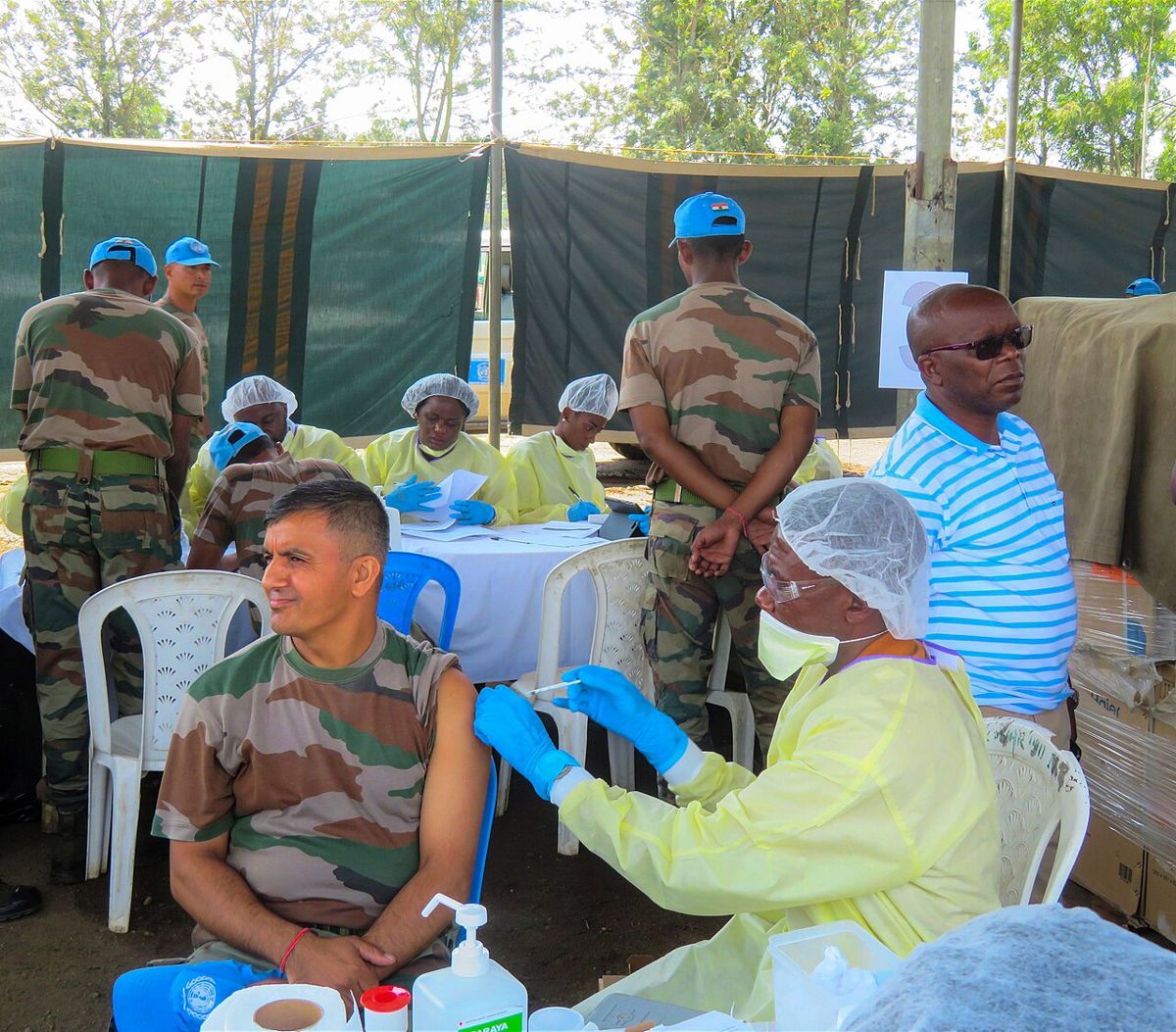
Kenya discharges last Ebola patient, starts 42-day countdown to being declared Ebola-free
Kenya discharged its last Ebola patient on 11 November and began the WHO 42-day countdown on 12 November; if no new case appears, it could be declared Ebola-free around 23 December.


Kenya discharged its last Ebola patient on 11 November 2026 and began the World Health Organization's 42-day countdown on 12 November, the Cabinet Secretary for Health, Hon. Aden Duale, announced in Nairobi. If no new case is recorded during that period, Kenya could be declared free of Ebola on or about 23 December 2026 under WHO rules.
Kenya's first case was confirmed on 6 October 2026 in a traveller who returned from the Democratic Republic of the Congo via Uganda. Contact tracers listed and monitored 135 people who had been in close contact with the index patient. In the days after the first diagnosis, eight additional people tested positive: four family members and four health workers who had cared for the traveller before Ebola was suspected. Every one of them was already in quarantine when they fell ill, and the virus did not spread in the wider community.
The outbreak in Kenya resulted in nine confirmed cases and two deaths. Seven patients have recovered and been discharged: five were released on 3 November, a sixth on 6 November, and the last on 11 November. The last confirmed case was recorded on 19 October and no new cases have been reported since then.
Hon. Duale thanked doctors, nurses, laboratory teams, contact tracers, Kenyatta National Hospital, The Nairobi Hospital, county governments and partners including WHO for their roles in the response. Dr Abdourahmane Diallo of the WHO Regional Office for Africa congratulated Kenya and praised the country's transparency and rapid reporting.
Health authorities stressed that the countdown is not the end of the response. Rapid response teams will remain on alert in every county, every alert will be investigated, survivors will receive follow-up care and support, and screening and active surveillance will continue at health facilities and points of entry during the 42 days.
The regional context matters: the Democratic Republic of the Congo remains the principal source of risk. WHO reporting shows the DRC outbreak has reached nearly 11,000 confirmed cases and more than 5,000 deaths, and regular cross-border movement keeps the risk of imported cases alive.
WHO continues to advise against travel or trade restrictions on affected countries; Kenya has said it remains open for business, tourism, trade and travel. Authorities have urged vigilance and for anyone with fever, weakness, muscle pain, vomiting, diarrhoea or unexplained bleeding - especially after travel to an affected area - to seek care and use the toll-free number provided by the Ministry of Health.
Kenya's milestone shows how rapid detection, full contact tracing and quarantine can limit transmission and keep an outbreak from spreading into the community. But with Bundibugyo virus still active in neighbouring countries, health officials say continued vigilance during the 42 days will be essential to confirm the country has truly interrupted transmission.
Newzroom dot Africa has reached out to Ministry of Health, Kenya, Africa Centres for Disease Control and Prevention and WHO Regional Office for Africa for comment and is awaiting a response. This story will be updated when they respond.
Source: WHO Africa