Lesotho puts people with lived experience at the centre of mental health reform
Basotho with lived experience led calls for people-centred, rights-based services at a World Mental Health Day event in Maseru as Lesotho moves to implement a new national policy.
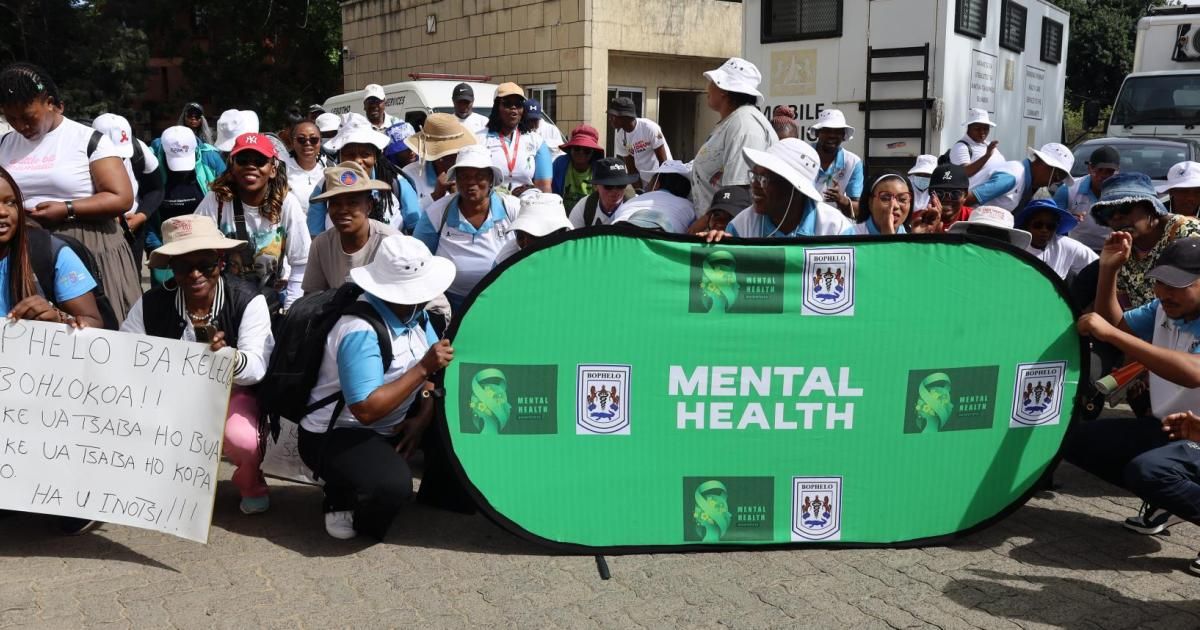
Lesotho used World Mental Health Day in Maseru to put people with lived experience at the heart of calls for more people-centred, rights-based services.
The event, organised by the Ministry of Health with support from the World Health Organization (WHO), used the theme "Lived Experiences Heard: Real Voices, Real Change." Speakers and survivors said listening to people who have lived with mental health conditions must shape policy, service design and delivery.
Two personal testimonies stood out. Forty-two-year-old Lekhetho Khama described a long struggle with stigma and recovery and now speaks openly to encourage others to seek help. Survivor-advocate Malehlohonolo Makama told the gathering: "Nothing about us without us," urging that people living with mental health conditions be active partners in decisions that affect them.
Speaking at the commemoration, Minister of Health Hon. Mamokete Ntsekhe called for dignity, inclusion and compassion in care. She urged greater access to psychological services, more community awareness, safer working environments for health workers and formal recognition of people with lived experience as partners in strengthening services.
WHO Lesotho's Public Health Officer Dr Sirak Hailu Bantiewalu outlined the scale of the challenge: nearly 1.2 billion people worldwide live with a mental health condition and close to 150 million people in Africa are affected by mental, neurological or substance use disorders. He warned that stigma, limited services and weak investment leave many without care, and said listening to lived experience is essential to design safe, respectful services.
According to the ministry and WHO regional notes from the intercountry meeting in late May, Lesotho's validated National Mental Health Policy (20 May 2026) sets out a package of reforms. That package includes integrating mental health into primary health care, expanding community-based and people-centred services, strengthening the mental health workforce, improving data collection and surveillance, and exploring financing mechanisms and partnerships to support those reforms. Officials describe the policy as a framework whose implementation will require building capacity at primary care level, scaling community interventions, and improving monitoring systems.
The validation on 20 May 2026 was followed by Lesotho's participation in a WHO Regional Office for Africa intercountry meeting (26-29 May) that set regional targets for 2030. Those targets include ensuring all countries have a mental health policy, 70% of countries establish a dedicated mental health budget line, and 60% integrate mental health into primary health care. Lesotho's officials have linked their work to these regional goals, and WHO has offered technical support for policy implementation.
Local research cited at the meeting points to large gaps between need and care in Lesotho. A recent population-based household survey of 6,061 adults found wide variation in problem types and large awareness and treatment gaps: moderate or severe anxiety in the past two weeks was reported by 0.7% of respondents, while alcohol use in the past three months was 36.4%. The study reported an awareness gap for mental health problems of about 62% and a treatment gap of about 82%; for substance use problems the awareness gap was about 89% and the treatment gap about 95%.
Separate analysis of the 2023-24 Lesotho Demographic and Health Survey, focusing on women aged 15-49 (a weighted sample of 3,265), found prevalence measures that underline the burden among women: self-reported physician-diagnosed depression 10.62%, PHQ-based depressive symptoms 5.37%, and self-reported physician-diagnosed anxiety 9.07%. The studies point to links between chronic illness, financial barriers and higher odds of depression and anxiety, and they highlight regional disparities inside Lesotho.
The ministry and WHO materials stress the need to enhance financing mechanisms and partnerships, but public notes from the validation and the intercountry meeting do not give a dedicated national funding line or exact budget figures. The WHO regional targets set a benchmark for countries to aim for a dedicated mental health budget line by 2030; WHO has offered technical assistance to Lesotho as it moves from policy validation to implementation.
Putting lived experience at the centre of reform is intended to change how services are designed and delivered: survivors and advocates say it steers resources towards community-based psychological and social support, improves training for frontline health workers, and helps reduce stigma so more people seek help. For Lesotho, where surveys show large awareness and treatment gaps and a substantial burden of alcohol use and depression among women, those changes could expand access where it is most needed.
The intercountry meeting brought countries together to share practical strategies for workforce development, integrating services into primary care, improving data and surveillance, and mobilising financing. Lesotho's officials described validation as the first step; the coming work is implementation at community and primary care level, supported by WHO technical assistance and by efforts to meet the regional 2030 targets.
WHO reaffirmed its commitment to support the Government of Lesotho and partners in advancing accessible, rights-based and people-centred mental health care for all, including technical support for policy implementation and efforts to strengthen mental health services nationwide.
Newzroom dot Africa has reached out to Ministry of Health, Lesotho, WHO Lesotho and Wellcome Trust for comment and is awaiting a response. This story will be updated when they respond.
Source: WHO Africa