Informal buyers linked to wider use of safer growing and handling practices by Nigerian tomato farmers, study finds
A Food Security paper using a 1,673-farmer survey finds wholesalers and aggregators are associated with greater adoption of safer tomato farming and handling practices across Nigeria.
A peer-reviewed study in Food Security finds Nigeria's informal midstream buyers - wholesalers, aggregators, transporters and processors - are associated with higher adoption of safer growing and handling practices by smallholder tomato farmers, even where no formal contracts exist.
The paper, "Market channel and other drivers of tomato farmer production and handling practices in Nigeria" (Food Security, 2026-02-06), analysed survey data from 1,673 tomato farmers across Nigeria and used statistical methods to test what drives farmers' market choices and on-farm practices during the 2022/2023 production season.
The study found that selling to wholesalers and aggregators is an important determinant of adopting good agricultural practices (GAP) and good handling practices (GHP). The authors say larger smallholder farmers using modern irrigation are more likely to sell to midstream actors, and that the relationship between market channel and practice adoption holds across their analyses.
The International Institute of Tropical Agriculture (IITA), which issued the press material accompanying the study, said informal markets are shaping safer tomato farming practices in Nigeria and that the results challenge the common view that informal value chains are inherently exploitative and unable to support food-safety improvements.
The paper assessed three recommended pre-harvest practices and five harvest and post-harvest practices relevant to tomato production in the 2022/2023 season. The researchers link adoption of GAP and GHP to improved product quality, reduced food-safety risks and to implications for food security and producer livelihoods.
Those findings reflect Nigeria's regional trade patterns. Tomatoes are grown largely in northern states and moved south to large wholesale markets, and the study uses that geography as evidence of how midstream actors influence farmer behaviour. Aggregators collect produce and arrange transport to wholesale hubs such as Mile-12 in Lagos and Akinyele in Ibadan; through repeated, informal trading relationships midstream actors can influence farmers' practices in ways the paper says affect product quality and safety.
The authors argue that development programmes and policymakers should consider engaging midstream actors when designing efforts to expand GAP and GHP adoption, rather than focusing only on formal contract farming models. In practice this could mean training or incentive programmes aimed at wholesalers and aggregators, or policies that recognise and strengthen the informal networks that already link smallholders to cities.
The press material accompanying the study was issued by the International Institute of Tropical Agriculture (IITA). The open-access article is available on Springer.
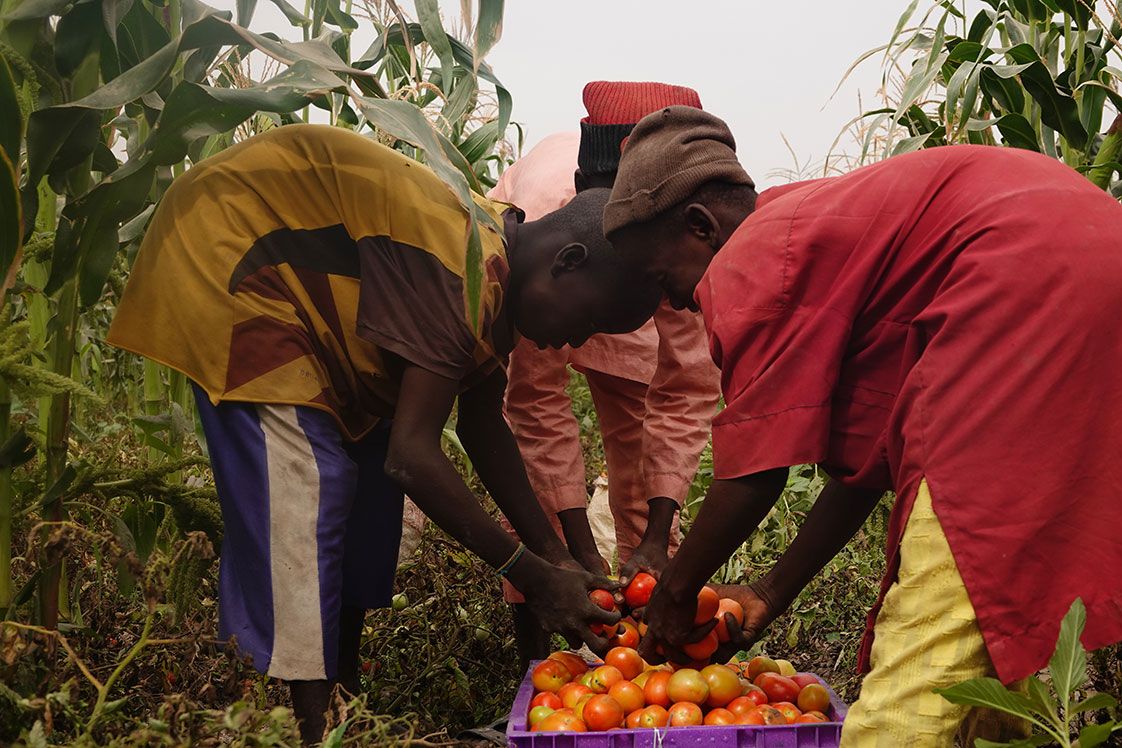
Photo: Tomato farmers and harvested crop at a farm in northern Nigeria. Credit: IITA.
Newzroom dot Africa has reached out to Michigan State University for comment and is awaiting a response. This story will be updated when they respond.
Source: IITA