COP31 leaders call for AI, digital twins and IoT to build climate-resilient cities
At COP31, ministers, mayors and experts issued a Global Call to Action asking governments, cities and the private sector to adopt shared U4SSC KPIs and interoperable standards so AI, digital twins...
18 November 2026
Leaders at COP31 in Antalya on 16 November 2026 announced a Global Call to Action urging governments, city authorities and the private sector to adopt shared measurement frameworks so cities can use artificial intelligence (AI), digital twins and the Internet of Things (IoT) to track and manage climate-resilience outcomes. The Call points to the United for Smart Sustainable Cities (U4SSC) Key Performance Indicators (KPIs) as a common basis for measuring progress.
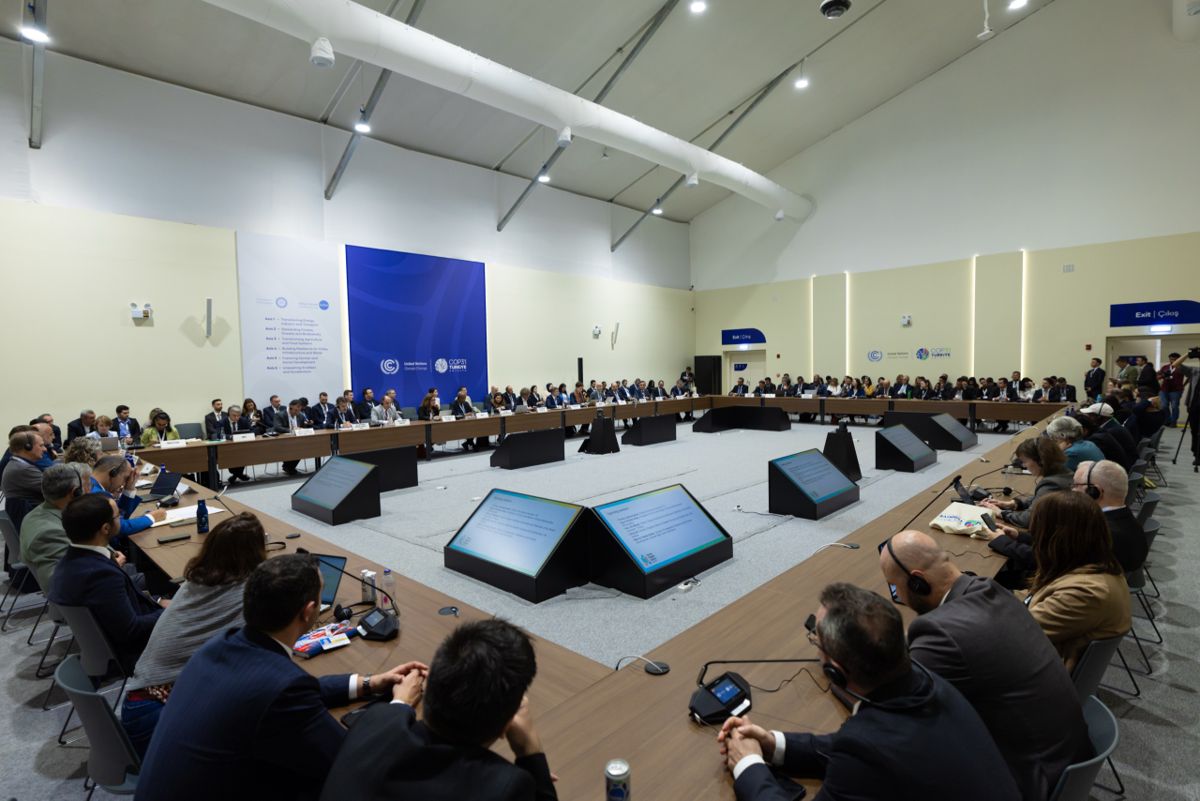
The call was made during the COP31 "High-Level Dialogue on Cities - Resilient Cities, Reimagined: AI, Digital Twins & IoT for a Sustainable Future", convened by the COP31 Presidency and the International Telecommunication Union (the ITU), in collaboration with UN-Habitat, the the UNFCCC and Turkey's Ministry of Environment, Urbanization and Climate Change. Ministers, mayors, industry and academic representatives took part.
The Global Call to Action asks governments, city authorities, the private sector, academia and other stakeholders to work from a shared framework aligned with the UN Sustainable Development Goals, the Pact for the Future and the Global Digital Compact. It makes monitoring central: cities are urged to use the U4SSC KPIs as a basis for measuring progress in a way that aligns with the UN-Habitat Global Urban Monitoring Framework.
The meeting emphasised the use of digital tools to support city-level climate action. Speakers discussed how AI, digital twins and IoT can help cities monitor and manage climate and sustainability outcomes and how political and institutional cooperation can support wider implementation and measurable results.
Digital twins are digital models of real-world systems such as transport networks or water supplies; the Internet of Things refers to networks of sensors and connected devices that collect data. The meeting also discussed adoption of international interoperability standards to support the implementation and scaling of smart, resilient and sustainable city solutions across different systems. The ITU was one of the conveners and the discussion included technical aspects of standards and systems compatibility.
The meeting discussed setting up a follow-up mechanism to sustain implementation and monitor progress after COP31. The Call asks public and private actors to mobilise resources and to use the shared monitoring tools set out in the Call.
UN-Habitat is headquartered in Nairobi, and its Global Urban Monitoring Framework is cited in the alignment with the U4SSC KPIs.
Next steps signalled at the dialogue are practical: cities and countries are invited to adopt the U4SSC KPIs, to pursue interoperable systems that can be scaled across jurisdictions, and to feed progress into the proposed follow-up mechanism after COP31. The Call and related materials are available on the COP31 site.
Read the Global Call to Action on the COP31 site: cop31.tr.
Newzroom dot Africa has reached out to International Telecommunication Union for comment and is awaiting a response. This story will be updated when they respond.
Source: COP31