COP31 guidance shows how country platforms can make green industrial plans bankable
The COP31 Climate Club and the OECD published practical guidance on 19 November to help countries design country platforms that bundle green industrial projects into investable pipelines and...
By Llewellyn Williams
The COP31 Climate Club and the OECD published guidance on 19 November to help countries turn green industrial plans into bankable project pipelines that can attract large-scale finance.
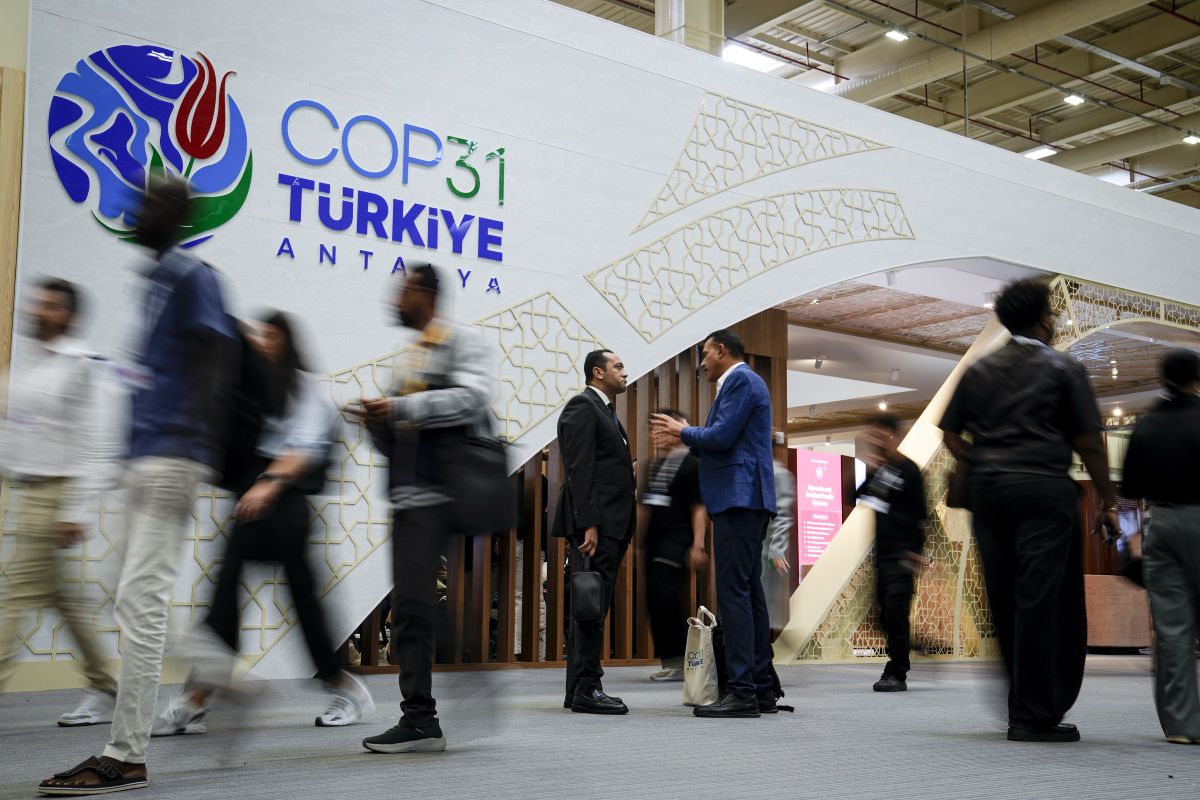
At COP31 in Antalya the guidance focused on practical steps to move from national plans to investable projects.
The guidance describes how country platforms coordinate governments, industry, development banks and private financiers so decarbonisation becomes a planned programme of investable projects rather than a series of isolated pilots. It sets out five practical dimensions that countries should design into any platform.
What a country platform does
- Strategic foundations and governance - setting national priorities and institutional arrangements;
- National readiness and enabling investment conditions - improving policy, regulation and capacity so countries can receive investment;
- Pipeline creation and project development - developing bankable project proposals and roadmaps ("bankable" means structured and risk-managed so they can attract commercial investors);
- Finance mobilisation and investment scaling - aligning public and private funding and technical assistance around shared priorities to mobilise finance at scale;
- Monitoring, accountability and learning - measuring outcomes, applying selection guidelines and improving performance over time.
Concrete examples and what they mean for Africa
The guidance points to practical examples including the Turkiye Industrial Decarbonisation Investment Platform (TIDIP), launched with support from the EBRD. The EBRD says that platform-style approaches create the roadmaps and investment pipelines large lenders and private investors can use; TIDIP aims to mobilise finance at scale and to reduce industrial emissions across sectors such as steel, aluminium, cement and fertiliser.
Platform-style finance is already being explored in southern Africa. The Green Climate Fund approved US$140 million in catalytic financing for Climate Investor Three (CI3) to support activities in South Africa and Namibia under the Southern African Industrial Decarbonisation Facility (SIDF), with the Development Bank of Southern Africa acting as the GCF's accredited entity. Proponents say that programme is designed to use public catalytic capital to derisk projects so private investors can follow and would support about 1.52 GW of renewable capacity across the programme. In South Africa the CI3 country vehicle SA-H2 reached a first close of around ZAR 3.0 billion, showing investor interest in green hydrogen and other hard-to-abate industrial projects.
These examples show how platforms can bundle technical assistance, project development and different financing tranches so large, long-lived industrial projects meet investor requirements. For many African countries this matters because competitiveness challenges such as high energy costs, unreliable power and limited project-development capacity make it hard to convert climate plans into investment-ready projects. Platforms can help by aligning policy, providing early-stage public risk capital and pooling technical support.
The guidance is practical and focused on implementation: it outlines institutional arrangements, project-selection guidelines and finance-mobilisation approaches that countries should design if platforms are to attract institutional capital. The document emphasises that platforms should be country-led and investment-focused to secure private participation.
Dr Tugba Dincbas, Director of the COP31 Action Agenda and Co-Chair of the Climate Club, said country platforms work best when they are country-led, investment-focused and grounded in industrial realities, and that lessons from Turkiye provide a practical starting point for countries seeking to coordinate partners and scale investment. Jaime de Bourbon de Parme, Director of the OECD Environment Directorate, said the OECD analysis offers a practical framework to design platforms, mobilise investment at scale and deliver concrete results.
For the full guidance and the OECD analysis see the COP31 Presidency guidance page and the OECD Environment pages; see also the EBRD information on TIDIP and the linked coverage of the GCF approval, CI3/SIDF and the SA-H2 first close cited above.
Source: COP31