AI model identifies 130 Western Leopard Toads in over one million photos from Cape tunnels
Joshua Salako's AI reads camera-trap photos from False Bay Nature Reserve tunnels to track endangered Western Leopard Toads during 2023-2026 seasons.
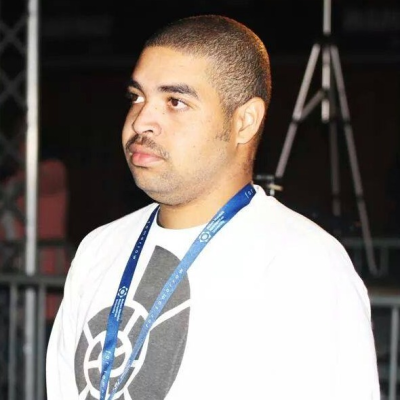

Joshua Salako, a master's researcher at the African Institute for Mathematical Sciences (AIMS) South Africa, developed an artificial intelligence model to detect endangered Western Leopard Toads in camera-trap photos taken in tunnels under Peninsula Road in the False Bay Nature Reserve.
As we see it, the open release of AmphiLens, with its code and trained models, is a practical step that could benefit many conservation projects beyond this one. However, we would like to know how accessible and affordable this AI tool is for smaller organisations across Africa, especially considering the large volume of photos-over 1 million in the 2026 season alone-that need processing regularly.
The tunnels, built to protect the toads during migration, generated over one million photographs between 2023 and 2025. Salako's model, designed to require minimal manual labelling, analysed all photos from the 2023 to 2026 seasons. It identified 730 toad sightings in 387 events and mapped 15 confirmed crossings through the tunnels.
The AI application, named AmphiLens, was published openly in October 2026 with its code, trained models, and installation guide, enabling other projects to use the tool for camera-trap data.
Nature Connect, the organisation managing the tunnels, runs AmphiLens weekly using Salako's trained models. The system has processed over 2.1 million photographs from 2023 to 2026. In the 2026 season alone, 1,176,380 photos were taken, with 384 showing toads, corresponding to 130 individual toads observed. The busiest night recorded 35 toads passing through the tunnels.
Each toad has a unique pattern of dark patches edged in yellow, which the portal compares to identify individual toads and confirm crossings. One toad, identified as T2026-7, was photographed at opposite ends of tunnel 4 eight minutes apart on 21 August 2026, confirming its safe passage.
The cameras took photos every 15 seconds as heat sensors were ineffective for the cold-blooded toads. Some toads moved faster than the interval between photos, suggesting actual crossings may be higher than recorded.
The busiest movement occurred on 17 August 2026 under a thin crescent moon, with humidity at 88% and temperatures between 12 and 17 6C, peaking at 15 6C. A mating pair was also photographed on 18 August.
Nature Connect installed the first two tunnels in 2021 with funding from Fondation Ensemble and Leisure Charitable Trust, and four more in 2023 supported by The Mohamed bin Zayed Species Conservation Fund and Forvia Foundation. Camera traps have been sponsored by Hensoldt, and volunteers have monitored toad activity since the tunnels opened.
Salako said his research combines artificial intelligence and ecology, providing evidence that safe migration is possible when organisations collaborate. The project marks Nature Connect's 25th year of conservation work.
Sources
- Written for Newzroom dot Africa by Llewellyn Williams