African carriers have about 236 aircraft on firm order as fleets modernise
Industry compilations show African airlines have roughly 236 aircraft on firm order, led by Ethiopian Airlines' backlog of about 74 jets.


By Brian Williams
Brian Williams is an aviation writer who has tracked African carriers and markets.
Industry compilations show African carriers have committed to roughly 236 aircraft on firm order, a wave of purchases that industry analysts say will change frequencies, fares and cargo links; the 236-aircraft figure and the type breakdown below come from a TravelNews.Africa compilation of publicly reported orders, which TravelNews describes as firm orders but does not always separate firm manufacturer orders from options, leases or lessor commitments for every line item and in some cases combines lessor commitments and reported airline backlogs (TravelNews.Africa).
What types are on order
The three single largest types on order are listed by market compilations as the Boeing 737-8 (about 64), the Airbus A350-900 (about 49) and the Boeing 787-9 (about 35), according to TravelNews.Africa. Regional types such as the ATR 72-600 and Embraer regional jets also appear, reflecting simultaneous investment in short regional hops and growing long-haul capacity.
The Boeing 737-8 is a new-generation narrowbody for short and medium-haul services that lets airlines increase frequencies between cities and replace older single-aisle jets. The Boeing 787-9 and Airbus A350-900 are widebodies that give carriers the range for intercontinental routes and larger belly-freighter volumes than narrowbodies, which supports cargo links between Africa and Europe, Asia and the Americas.
The Airbus A321XLR is a long-range narrowbody designed for thin, direct long-distance routes that previously required connections; its range lets carriers open nonstop services between secondary African cities and distant markets. Smaller ATR and Embraer types serve as feeder aircraft on short regional hops, improving intra-African connectivity and enabling higher frequencies on lower-demand routes.
Who is leading the orders
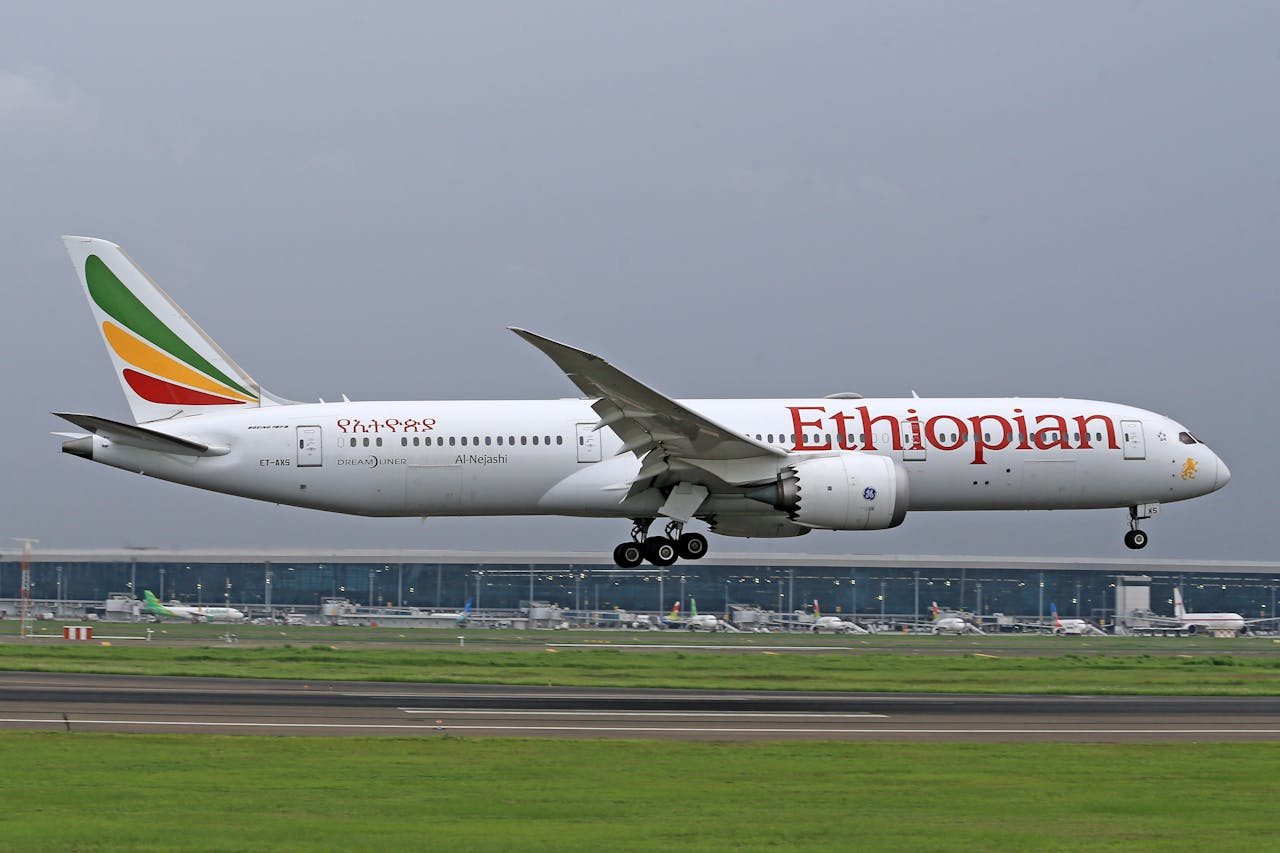
Ethiopian Aviation Holding Group has the continent's largest backlog, with about 74 aircraft on order, including 40 Boeing 737-8s, 26 Boeing 787-9s and eight Boeing 777-9s, according to TravelNews.Africa. Trade outlets also reported Boeing and Ethiopian announced freighter orders in 2026; AfricanPilot reported on 30 September 2026 that Ethiopian ordered eight Boeing 777-8 Freighters and two 777 Freighters, making Ethiopian the first African carrier to order the 777-8 freighter.
Other carriers have notable commitments. Uganda Airlines placed a direct Boeing order for four Boeing 737-8 and four Boeing 787-9 aircraft in 2026 (ATC/AeroTrail). Air Seychelles has a reported lease commitment for Airbus A321XLRs (ATC/AeroTrail). In November 2026 Libya signed a cooperation agreement with Boeing on fleet development, training and maintenance capacity; that agreement did not list specific aircraft purchases.
Delivery timing, orders versus options and how purchases are funded
Not every reported item is an immediate delivery: manufacturers, airlines and analysts distinguish firm orders from options and leases. Airlines sometimes convert options into firm orders before delivery, and lessors fulfil many commitments so an airline can take aircraft sooner. Leasing, export-credit agency support, development finance, state-backed guarantees and partnerships with global lessors are commonly used to fund acquisitions; analysts and industry bodies including AFRAA are part of the discussion (AirSpace Economy).
Constraints that will affect how quickly the planes fly
Industry reporting and regional analysts warn that new aircraft alone do not guarantee more services. Recurring constraints include limited MRO (maintenance, repair and overhaul) capacity on the continent, shortages of certified technicians and trained flight crews, airport infrastructure limits such as runway length and cargo handling, and the availability of finance.
Market data also show that heavy maintenance for many African operators is still done outside the continent, and that certified technician shortages are a real bottleneck; building local MRO hubs is under way but will take time and investment.
What it means for travellers and business
Manufacturer outlooks project long-term growth for African air travel: Boeing forecasts passenger traffic rising about 5.8% a year through 2045, and Airbus projects roughly 1,640 new passenger aircraft deliveries to Africa between 2026 and 2045, most single-aisle (AirSpace Economy). If deliveries, financing and operations align, those forecasts point to more frequencies, new direct services and expanded cargo capacity.
Having tracked African aviation, I see these orders as creating the technical possibility of more routes and cargo capacity. Turning that potential into cheaper, more reliable travel depends on delivery schedules, financing, airport upgrades and the people who maintain and crew the aircraft.
Sources: TravelNews.Africa; AfricanPilot (Dreamliners); AfricanPilot (777-8 freighters); ATC/AeroTrail; AirSpace Economy; Libyan News Agency (LANA).
Newzroom dot Africa has reached out to Ethiopian Airlines, Uganda Airlines and Boeing for comment and is awaiting a response. This story will be updated when they respond.