African leaders at CPHIA call for higher domestic health budgets and local vaccine manufacturing
At CPHIA 2026 in Addis Ababa, presidents and ministers urged governments to raise domestic health budgets and speed up African vaccine production to strengthen health sovereignty and accountability.

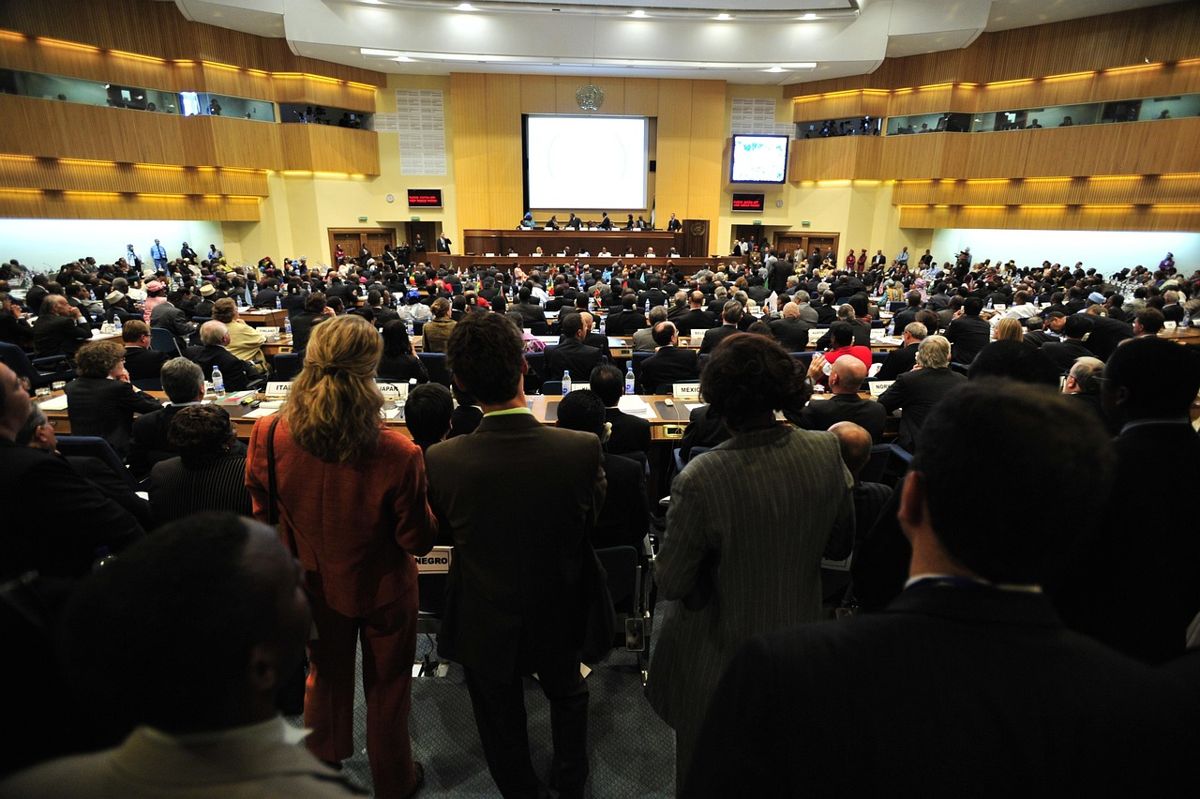
African leaders opened the Fifth International Conference on Public Health in Africa (CPHIA 2026) in Addis Ababa, calling for higher domestic health budgets and faster development of local vaccine manufacturing to strengthen the continent's health sovereignty. The conference runs from 23 to 27 November under the theme "Africa's Health Security and Sovereignty: Transformation from Health Dependency and Vulnerability to Ownership and Resilience."
The event, co-hosted by the Africa Centres for Disease Control and Prevention (Africa CDC) and the Government of Ethiopia at the Addis International Convention Centre, brought together Prime Minister Abiy Ahmed; President Evariste Ndayishimiye; President Samia Suluhu Hassan; President Julius Maada Bio; African Union Commission chairperson Mahmoud Ali Youssouf; and Africa CDC Director General Dr Jean Kaseya, alongside ministers, public health leaders and partners.
Africa CDC Director General Dr Jean Kaseya told delegates that health sovereignty must be matched by accountable national institutions. He said CPHIA was a movement for Africa's security and sovereignty and urged good governance, trust and accountability.
The opening featured the launch of the African Union Champions' Continental Roadmap on Reproductive, Maternal, Newborn, Child and Adolescent Health (RMNCAH) 2026-2030, championed by President Samia Suluhu Hassan. The roadmap centres on the Three Zeros: zero home deliveries, zero preventable maternal and newborn deaths, and zero unvaccinated children. President Hassan asked member states to designate national focal points with clear authority and integrate the Three Zeros into their existing national health strategies, and announced an initial commitment of 60 scholarships from Tanzania for specialised training in midwifery, anaesthesia, obstetrics and gynaecology and neonatal care.
Ethiopia presented an African Union Artificial Intelligence and Digital Health Championship, with Prime Minister Abiy Ahmed arguing that connected health systems and African-led technology can help a midwife consult a specialist remotely or ensure a patient's record follows them securely. He called for greater investment in African research institutions, laboratories and professional training, and identified priorities for continental cooperation including establishing centres of medical excellence, strengthening collective purchasing of African-produced medicines and health products, and improving accountability for implementation.
President Julius Maada Bio of Sierra Leone reported national campaign results at the opening: maternal deaths fell by about 34% and child deaths by about 12% compared with the same period a year earlier, and 10,764 previously unvaccinated children were reached. He warned, however, that progress is uneven, noting maternal deaths have risen in Freetown and gaps remain in emergency obstetric care, ambulance referral systems, trained personnel, blood supplies and essential medicines.
Money and manufacturing
Those calls for more domestic spending come against long-term shortfalls in government health budgets. A peer-reviewed analysis covering 52 African countries for 2014-2023 found the unweighted mean share of government spending on health rose only from about 6.73% in 2014 to about 7.09% in 2023, and that only South Africa met the Abuja Declaration target of allocating at least 15% of national budgets to health in 2023. The paper's authors said clearer accountability and complementary measures of absolute spending are needed.
On vaccine manufacturing, speakers pointed to progress but also continuing dependence on external finance and partnerships. Expression Africa reported that the Kigali BioNTech mRNA project has attracted a reported blended financing package from European institutions (a 35 million-euro grant and up to 60 million in loans) and earlier backing from CEPI of about 130 million euros, with pilot production targeted around 2026. Speakers and officials pointed to the need for further blended finance and pooled procurement to scale African vaccine production.
The opening also honoured public health contributors. Presidential Awards for Health Transformation went to President Ndayishimiye and Presidents Joao Lourenco, John Dramani Mahama, Netumbo Nandi-Ndaitwah and Dr Bio. Professor Rose Gana Fomban Leke received the Distinguished Scientist Award for malaria research and immunisation work. Extraordinary Global Health Leadership Awards were presented to Dr Sania Nishtar, Dr Richard Hatchett and Dr Philippe Duneton.
At the ceremony I was struck by how often leaders returned to the same point: money, local production and national accountability. The conference includes sessions on translating political commitments into national budgets, accelerating local manufacturing and delivering measurable improvements for women and children. CPHIA 2026 runs through 27 November.
Source: Africa CDC