A 39m x 16m maize plot can feed a family of six for a year, IITA finds
IITA adapted Zimbabwe's Pfumvudza into a 39m x 16m SmartPlot Naija block with 1,456 planting stations.
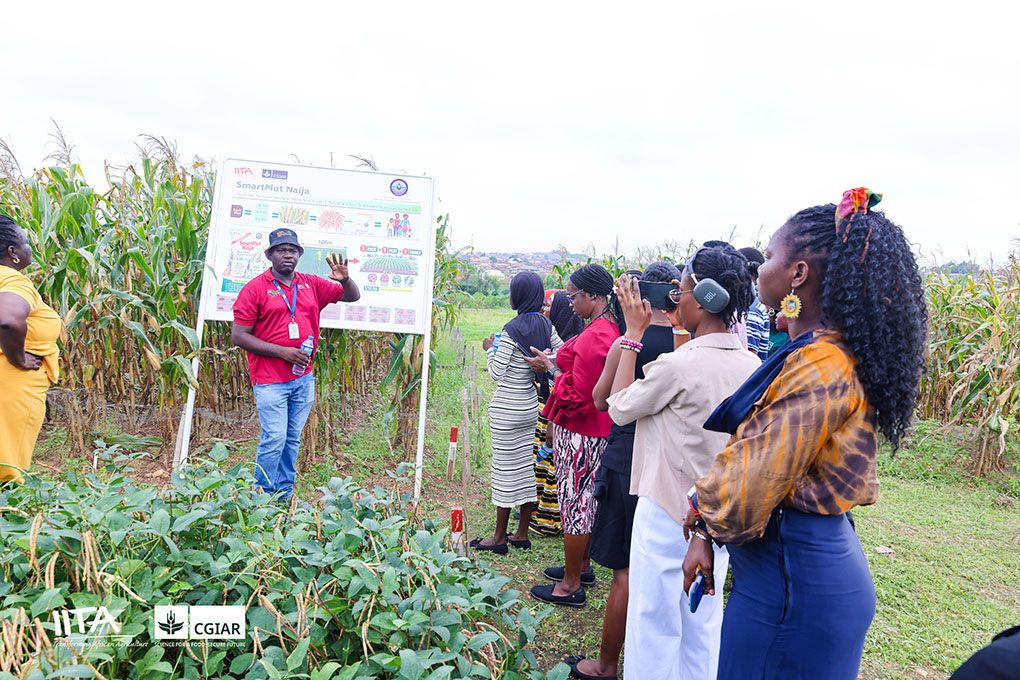
The International Institute of Tropical Agriculture (IITA) says a 39m x 16m maize block, promoted as SmartPlot Naija, is designed to show it can produce enough maize to meet a family of six's staple needs for a year by using careful planting and conservation agriculture rather than by using more land or mechanisation.
The design adapts the Pfumvudza Intwasa model, a conservation agriculture approach whose name means "new season" and which was developed by the Foundations for Farming; the organisation's guidance on Pfumvudza sets out the original spacing and pack instructions. IITA adapted the concept for Nigeria and renamed it SmartPlot Naija. Dean Muungani, Head of the Product Pipeline Development Unit and Product Manager for Grain Crops at IITA, said the initiative aims to answer how much land is required to feed a family of six for a year.
The model starts from a household assumption used by both Foundations for Farming and IITA: one 20 kg bucket of shelled maize per week supplies a family's staple requirement. Foundations for Farming sets out the arithmetic behind this: a 20 kg bucket can be filled by about 56 cobs if each cob weighs roughly 300 g, and at the model's spacing a single 16 m row can produce one such bucket. That gives the 39 m x 16 m block when multiplied to cover 52 weeks.
- Plot design: 39 m x 16 m (one sixteenth of a hectare); 52 rows; 75 cm between rows; 60 cm in-row spacing; 28 planting stations per 16 m row; 1,456 planting stations per plot.
- Seeding: plant 3 seeds per station, water (about 2 litres per station or wait for the first effective rain), then thin to 2 healthy plants per station about three weeks after emergence.
Foundations for Farming's published guidance and IITA's adaptation set out a stepwise agronomy: prepare and mulch the field in winter, mark the plot with permanent pegs, ensure it is weed free before planting, apply lime and a basal fertiliser about three weeks before planting, cover and leave a planting depth of about 5 cm, then follow with timely thinning, top-dressing, pest treatment, continued weeding and mulching, and leaving residues for the next season.
Academic research tracking decades of maize production finds maize is now Nigeria's largest cereal crop and that growth has been driven by area expansion and adoption of modern inputs, suggesting practices that concentrate labour and inputs on smaller, well-managed plots could complement wider efforts to raise smallholder productivity in Nigeria, according to a PMC analysis.
IITA presents SmartPlot Naija as a demonstration model to show how much land is required to feed a family of six for a year.
Newzroom dot Africa has reached out to Foundations for Farming for comment and is awaiting a response. This story will be updated when they respond.
Source: IITA