WHO Issues New Guidelines on Diagnostic Tools to Accelerate TB Detection
World TB Day highlights the urgent need for better diagnostics. Discover the WHO's new guidelines for rapid tuberculosis detection.

By Newz.Africa, Africa Desk | 25 March 2026 | Africa |World TB Day
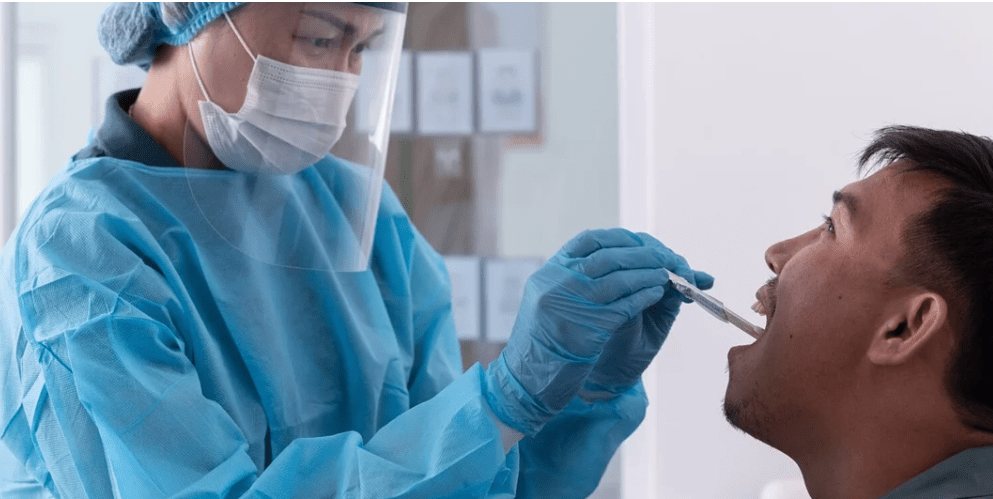
On World TB Day 2026, the World Health Organization (WHO) announced new guidelines recommending innovative diagnostic tools to accelerate tuberculosis (TB) detection. The announcement, made on 24 March 2026, highlights portable point‑of‑care tests and tongue swab sampling methods designed to expand access to lifesaving services. TB remains one of the world’s deadliest infectious diseases, killing more than 3,300 people every day.
WHO’s new guidelines introduce diagnostic tests that can be used near the point‑of‑care, delivering results in less than one hour. These portable devices, available at less than half the cost of many existing molecular diagnostics, can operate on battery power and enable patients to begin treatment sooner.
WHO Director‑General Dr Tedros Adhanom Ghebreyesus described the tools as “truly transformative,” emphasising their potential to save lives, curb transmission, and reduce costs (WHO release).
Beyond TB, the devices can also test for HIV, mpox, and HPV, aligning with patient‑centred approaches that integrate multiple services into one platform.
The guidelines further recommend:
- Tongue swab samples: Allowing adults and adolescents unable to produce sputum to access TB testing for the first time.
- Sputum pooling: Combining samples from several individuals to reduce costs and machine time, particularly in resource‑constrained settings.
Global Burden and Risks
TB continues to pose a major global health threat. Each day, more than 29,000 people fall ill with TB and over 3,300 die from the disease. Since 2000, global efforts have saved an estimated 83 million lives, but funding cuts now threaten to reverse progress.
Rapid diagnostic tools remain under‑utilised in many countries due to high costs and reliance on centralised laboratories. WHO is urging governments to scale up proven solutions, including point‑of‑care urine tests for people living with HIV and near‑point‑of‑care diagnostics for broader populations.
TB in Africa
Africa carries a significant share of the global TB burden. WHO Africa reports that the region accounts for nearly a quarter of global TB cases, with 2.7 million new infections and 378,000 deaths recorded in 2024 (WHO Africa TB Day 2026.
Sidebar: TB Burden Snapshot – Africa 2026
High‑Burden Countries
Regional Trends
- WHO Africa Region: Accounts for nearly 25% of global TB burden, with 2.7 million new infections and 378,000 deaths in 2024.
- Decline since 2015: TB deaths fell by 42% and incidence by 24%, but progress is uneven and many countries remain on WHO’s list of 30 high‑burden TB nations.
- Drug‑resistant TB: Concentrated in South Africa, Nigeria, and DR Congo, posing major treatment challenges.
This snapshot shows that while Africa has made progress in reducing TB deaths, high‑burden countries continue to struggle with detection, treatment, and drug resistance. WHO’s new diagnostic guidelines (portable point‑of‑care tests, tongue swabs, and sputum pooling) are particularly relevant for these contexts, where health systems face resource constraints and high HIV co‑infection rates.
South Africa alone reported 270,000 new TB cases in 2023, including 13,000 drug‑resistant cases, with more than 56,000 deaths. The country’s dual TB and HIV epidemics point to the need for integrated diagnostic platforms that can serve multiple health priorities simultaneously (South Africa Department of Health).
World TB Day 2026 Theme
Under the theme “Yes! We can end TB: Led by countries, powered by people”, WHO is calling for urgent action to:
- Accelerate the roll‑out of point‑of‑care diagnostic technologies.
- Strengthen people‑centred TB care with community leadership.
- Build resilient health systems to safeguard health security.
- Address social and economic drivers of TB through multisectoral action.
- Protect essential TB services amid global crises and funding constraints.
Dr Tereza Kasaeva, Director of WHO’s Department for HIV, Tuberculosis, Hepatitis and Sexually Transmitted Infections, stressed that “investing in TB is a strategic political and economic choice, generating up to US$43 in returns for every dollar spent.”
Further Innovation and Research
WHO emphasised that ending TB will require sustained investment in research and innovation. Current global funding for TB research is far below the estimated annual need of US$5 billion, leaving gaps in the development of diagnostics, medicines, and vaccines.
To address this, WHO has launched initiatives such as the TB Vaccine Accelerator Council, which aims to fast‑track vaccine development and ensure equitable access by coordinating governments, researchers, funders, and industry.
Sources
Original reporting: Newz.Africa reviewed WHO’s official news release dated 24 March 2026. The announcement detailed new diagnostic guidelines, sample collection methods, and global TB statistics. Quotes were obtained directly from WHO Director‑General Dr Tedros Adhanom Ghebreyesus and Dr Tereza Kasaeva.