Ramaphosa urges South Africa to build its own AI industry instead of only hosting data centres
Speaking in Silicon Valley, President Cyril Ramaphosa told a South African delegation that the country must move beyond hosting cloud infrastructure and develop local AI firms, research and...
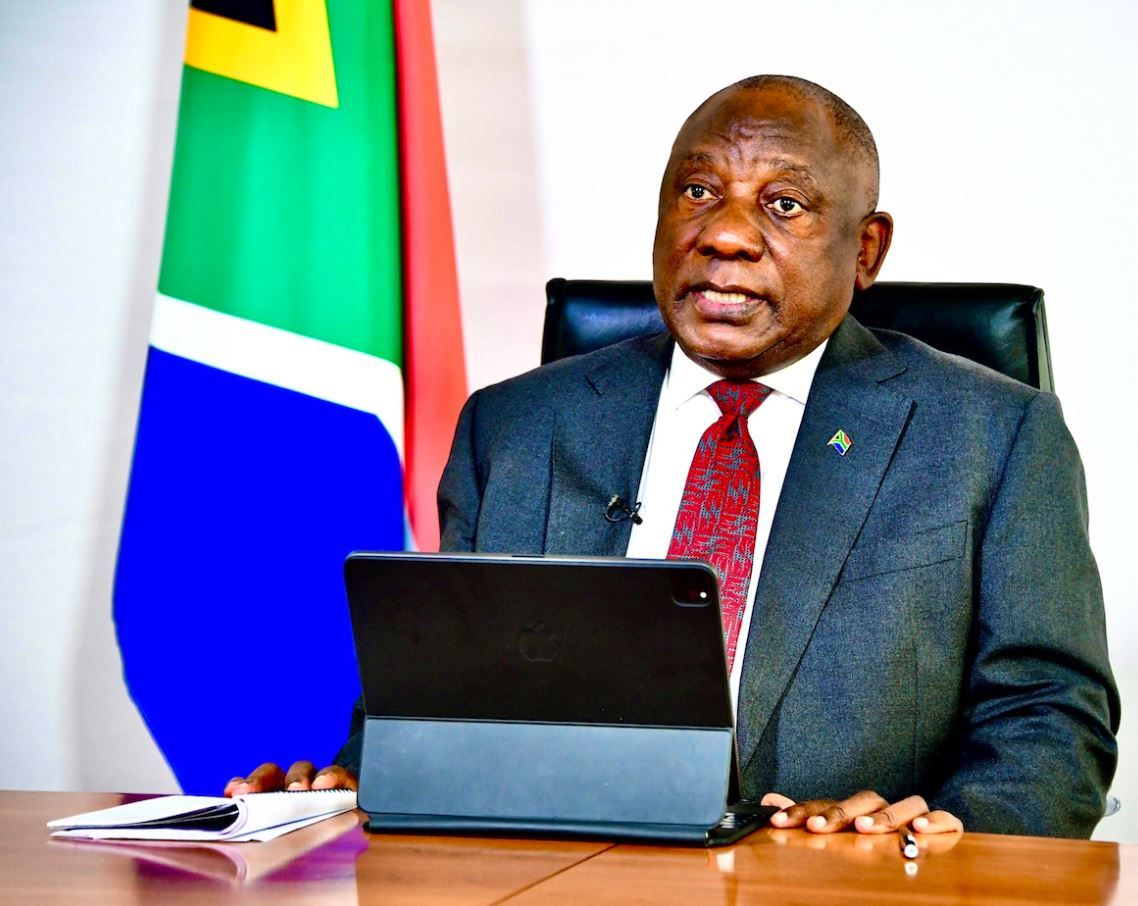
President Cyril Ramaphosa told a South African delegation in Silicon Valley that the country should stop being primarily a consumer of foreign artificial intelligence and cloud technologies and start building its own AI industry, including local firms, research and intellectual property. "We cannot afford to become merely consumers of these technologies that are controlled elsewhere, particularly in the northern hemisphere; we want to become active participants in shaping this new technological age. That is why we are here," he said. Ramaphosa told the delegation in Silicon Valley on 16 November, according to The Presidency.
The Presidency published the delegation's programme for the working visit, scheduled from 15 to 21 November. It lists a Semafor: Silicon Valley and the World session on 16 November, a visit to Stanford University on 17 November, a San Jose workshop on 18 November titled "South Africa and the Future of AI", and meetings with Alphabet/Google and Cisco on 19 November, with other industry visits during the week.
Ramaphosa proposed a concrete timeline: within 90 days of the delegation's return, officials should identify a focused set of practical initiatives for implementation. He said these should cover investment opportunities, research and skills partnerships and the application of AI to improve public services. Ramaphosa set the 90-day timeline in Silicon Valley on 16 November, according to The Presidency.
The President pointed to strengths South Africa can build on: world-class universities and research institutions, a sophisticated financial services sector, a growing technology industry and established digital infrastructure. He noted that major technology firms, including Microsoft, Amazon Web Services and Google, already invest in data centres and cloud computing operations in South Africa, and said the country must move from hosting infrastructure to becoming a centre of digital innovation.
Ramaphosa identified practical hurdles that must be solved for a local AI industry to grow: improving energy reliability and affordability, expanding digital connectivity, strengthening skills and providing policy certainty. He warned that government must streamline regulatory and administrative processes so investment and innovation are not discouraged, saying: "We cannot afford to move at yesterday's pace in a world that is changing at tomorrow's speed." Ramaphosa made that remark in Silicon Valley on 16 November, according to The Presidency.
Those obstacles are reflected in South Africa's own policy work. The Draft National AI Policy, published in April 2026 by the Department of Communications and Digital Technologies, highlights the digital divide, the need to build human capacity and the requirement for data and cloud infrastructure and governance as core pillars of an AI strategy. The draft calls for public-private partnerships, dedicated AI research centres and investment in computing capacity and skills development. See the OECD.ai summary of South Africa's draft policy and a longer explainer at Adams & Adams: OECD.ai and Adams & Adams.
Global investment patterns underline both the opportunity and the gap Ramaphosa described. According to The Presidency, leading cloud companies were planning roughly US$650 billion in AI capital expenditure in 2026, while venture capital investment in AI reached about US$259 billion in 2025. The Presidency cites those figures as part of the programme and briefing material for the delegation: The Presidency programme and statement.
Having data centres in a country does not automatically create an AI research and product ecosystem. Global cloud providers make services available regionally, which helps local businesses by reducing delays (latency) and by keeping data within a given jurisdiction where required (data residency). But building local AI firms and intellectual property also requires targeted research funding, advanced computing, trained specialists and early-adopter public-sector projects that create demand.
Ramaphosa framed the Silicon Valley visit as part of a coordinated national effort involving government, business, universities and research institutions to identify the partnerships and investments that will make South Africa a gateway to Africa's digital economy and one of the engines driving its growth.
Newzroom dot Africa has reached out to Amazon Web Services for comment and is awaiting a response. This story will be updated when they respond.
Source: SAnews